Linton- Life in the Collections


Walter Crane and W.J. Linton:
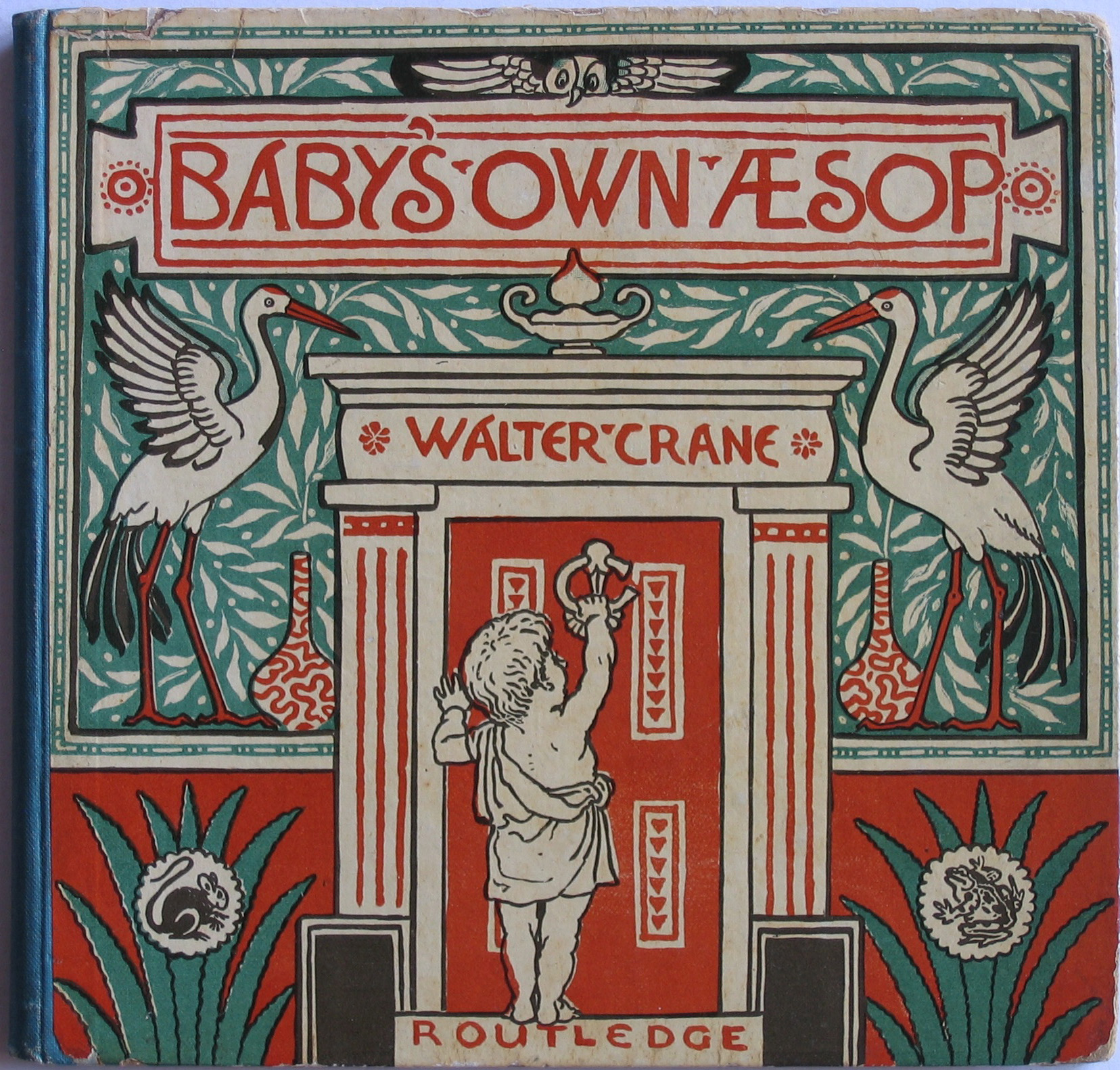
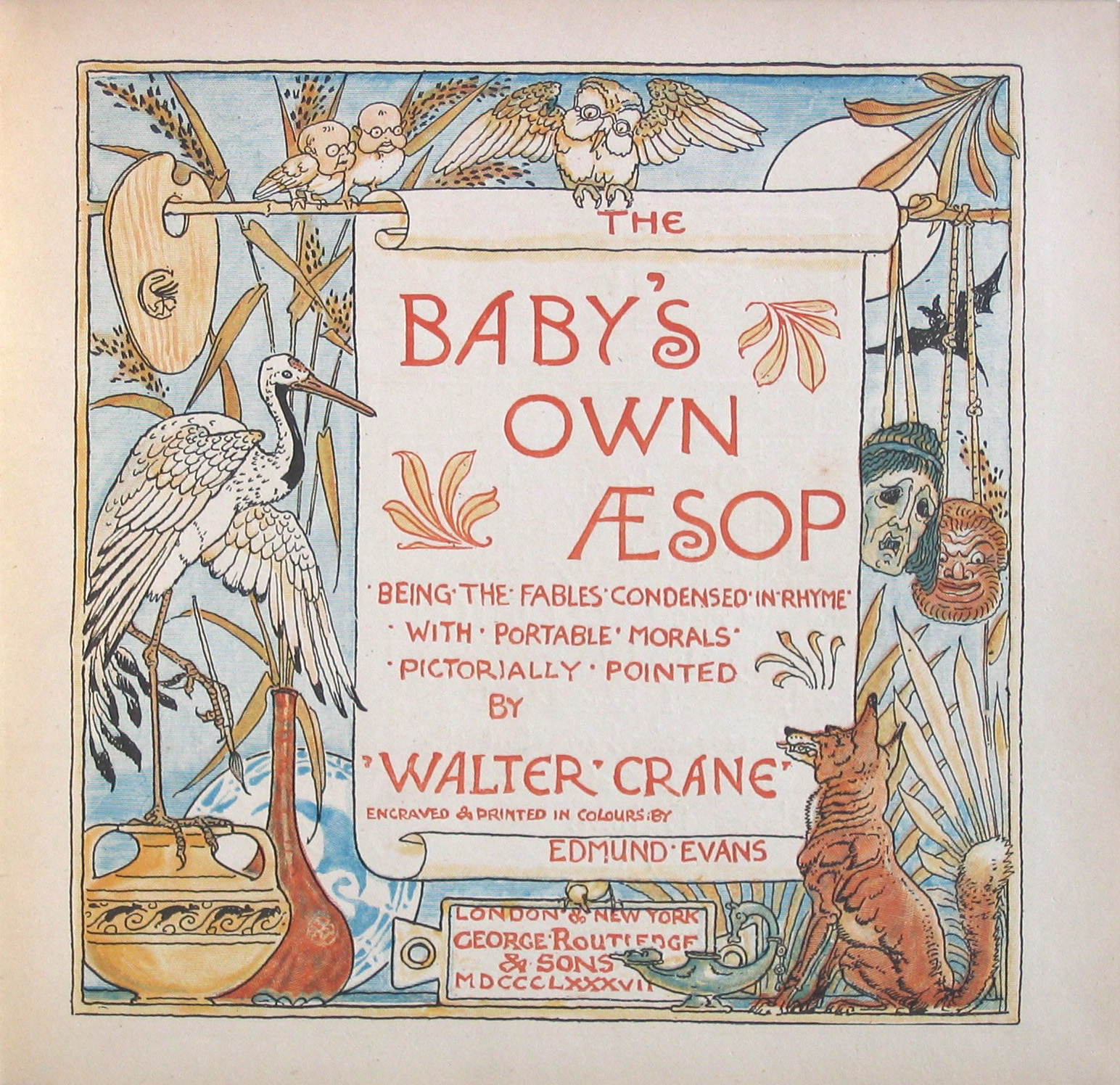
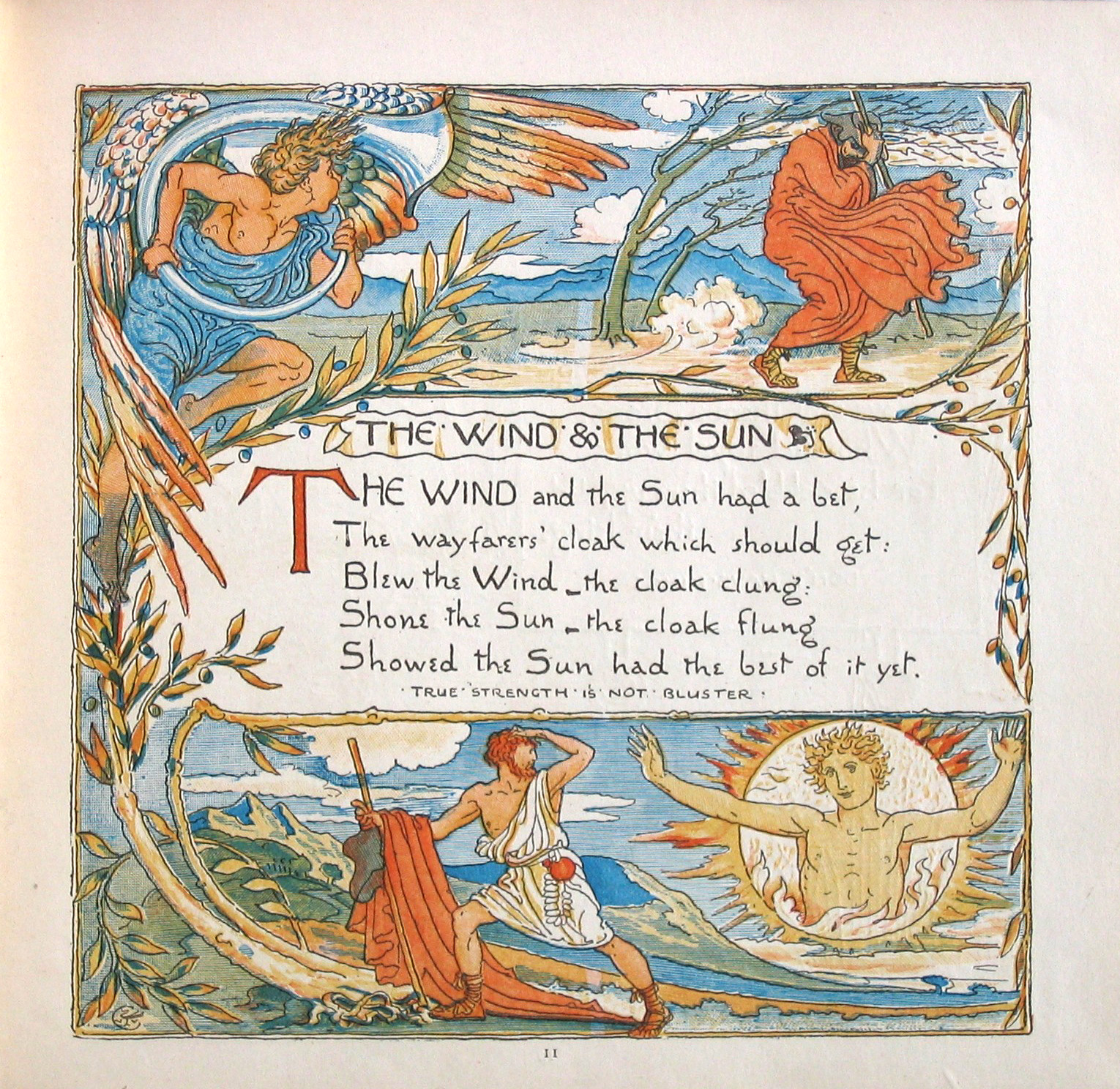
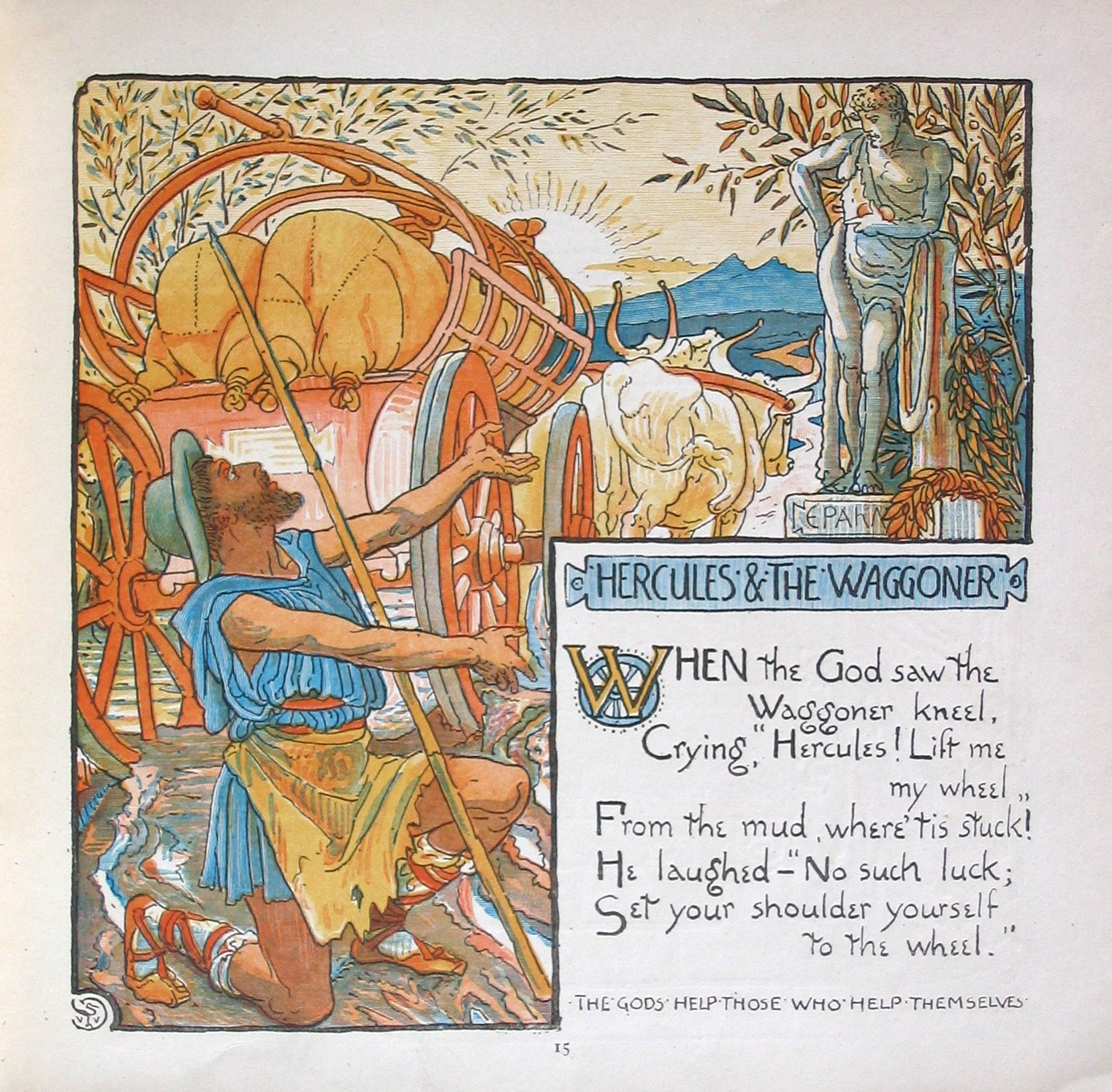
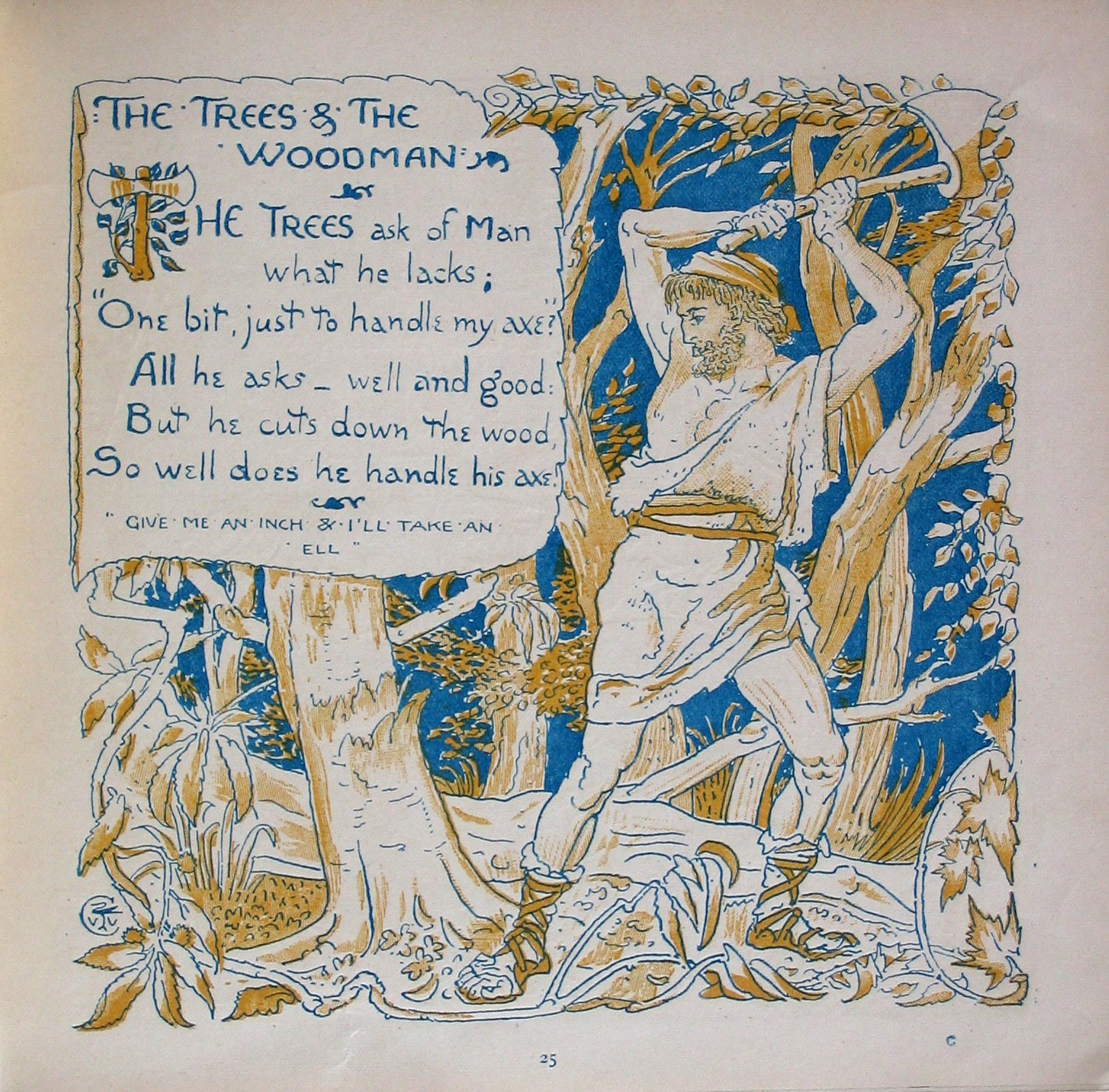
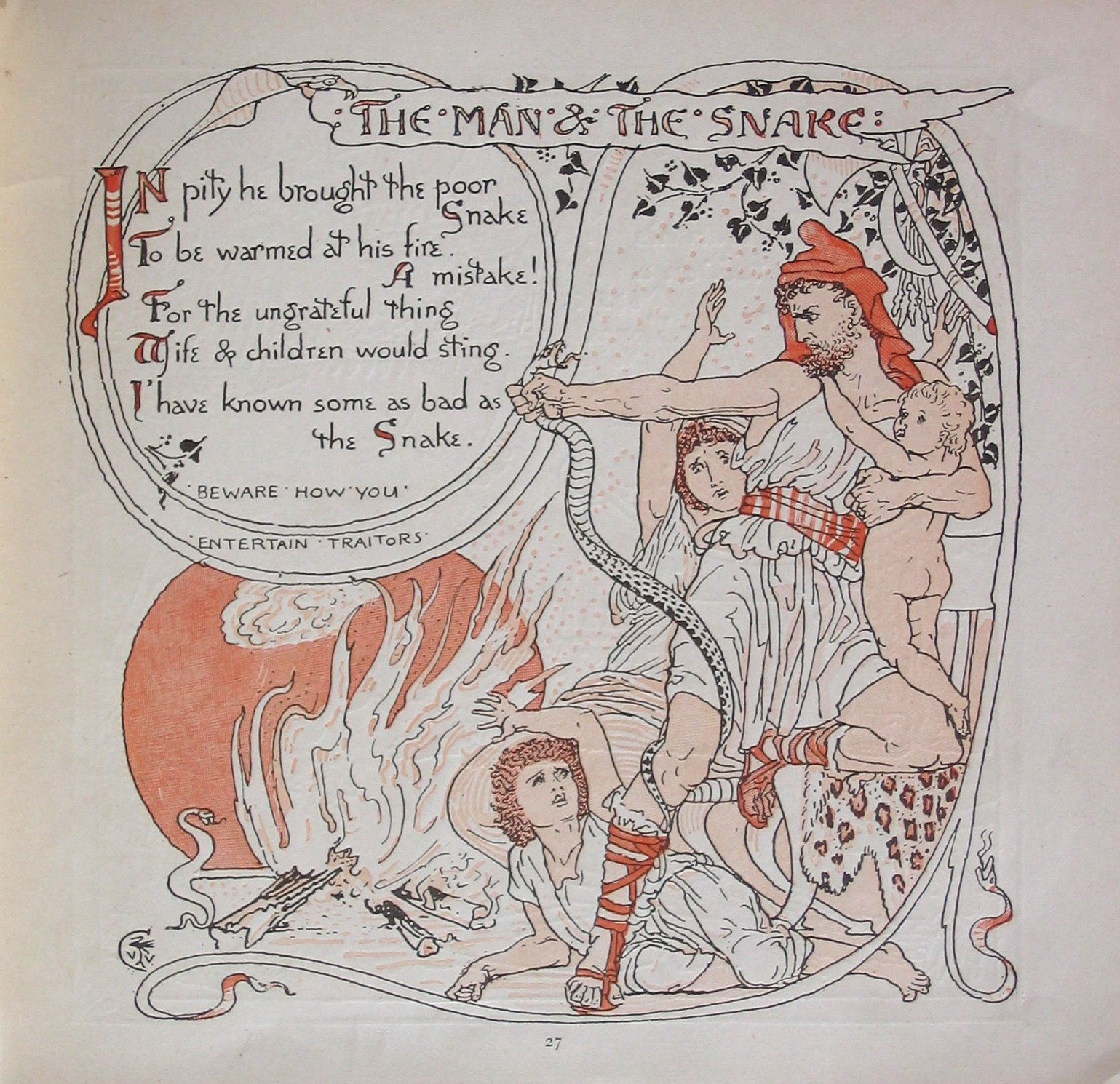
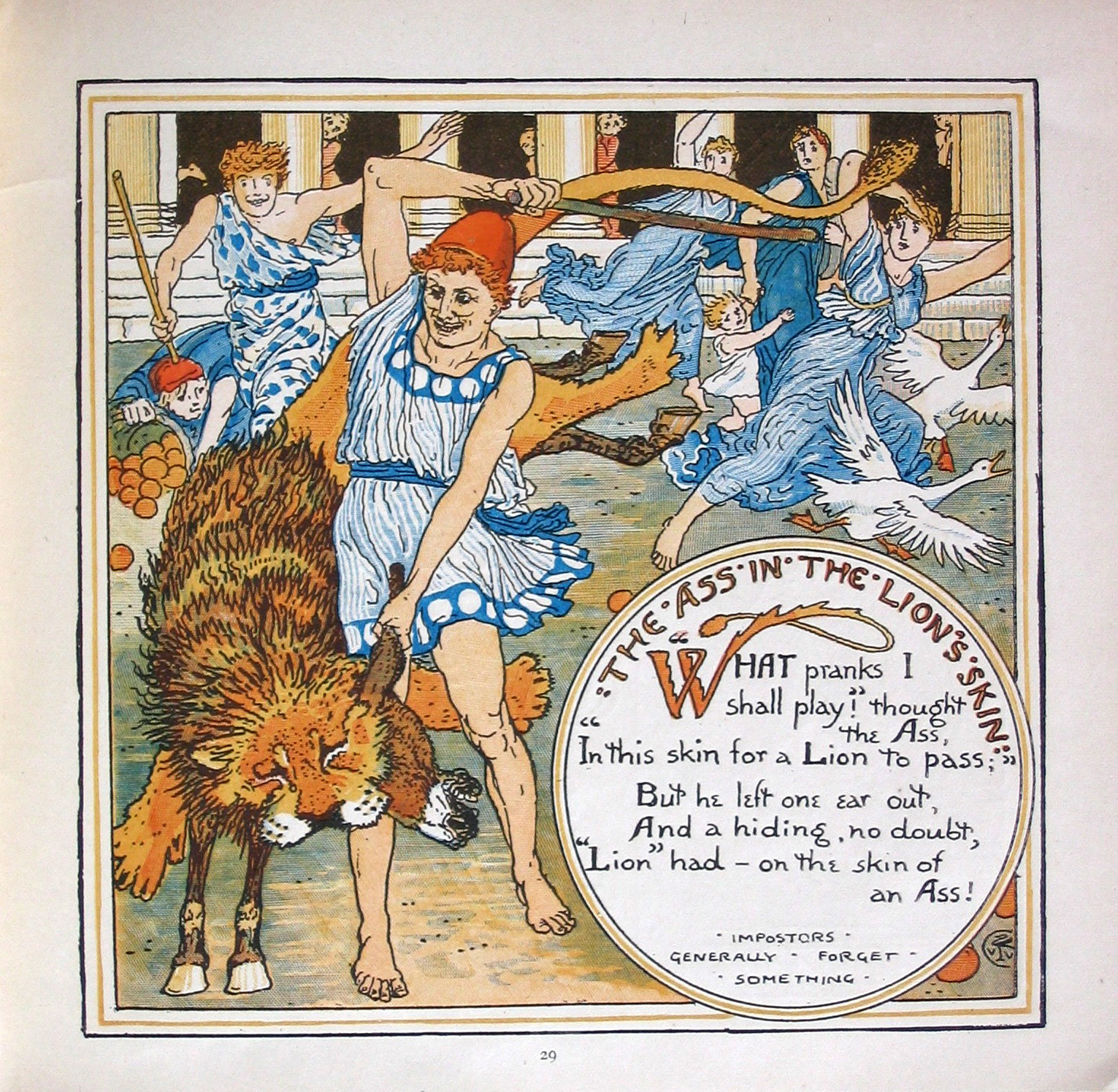
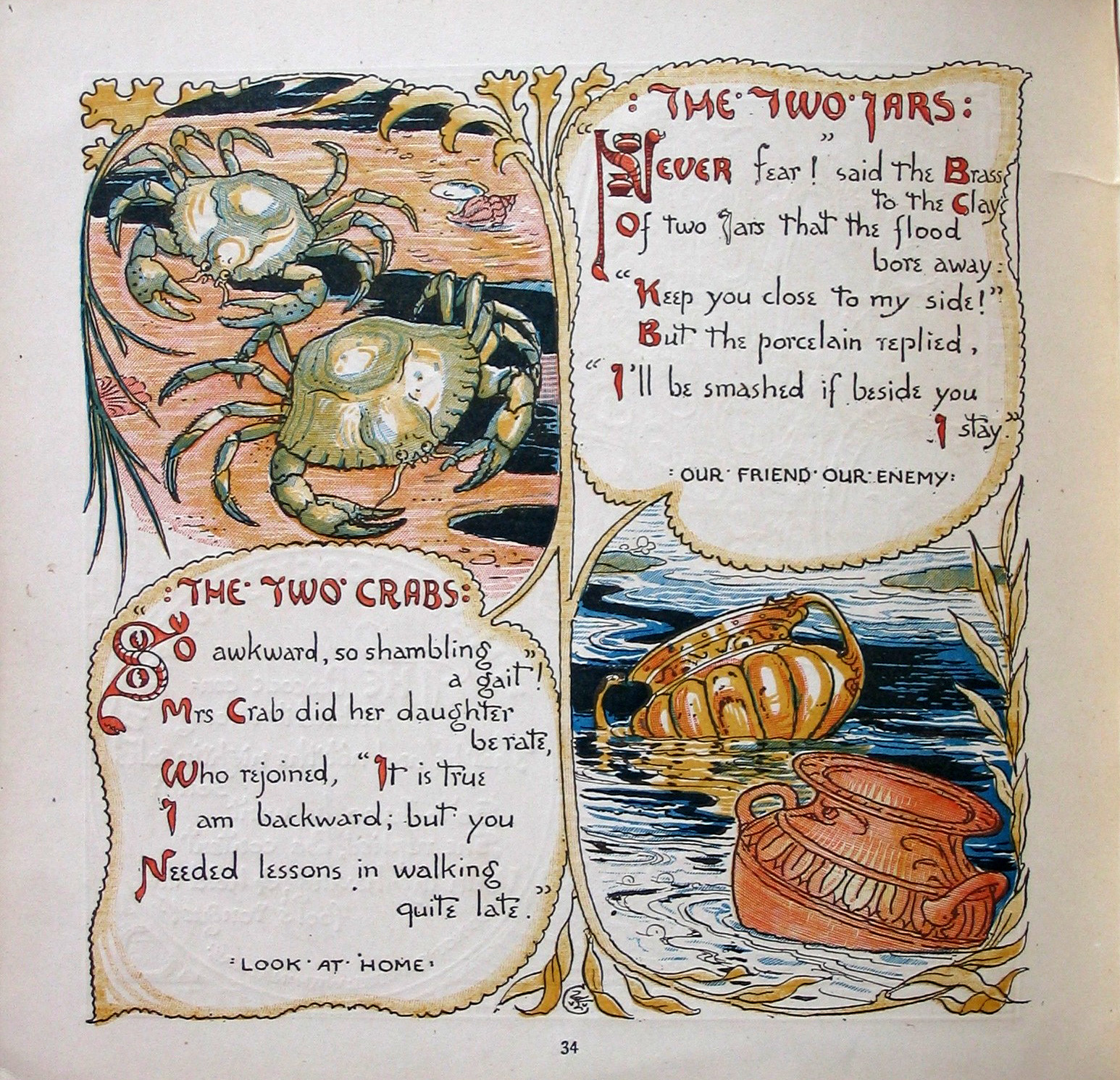
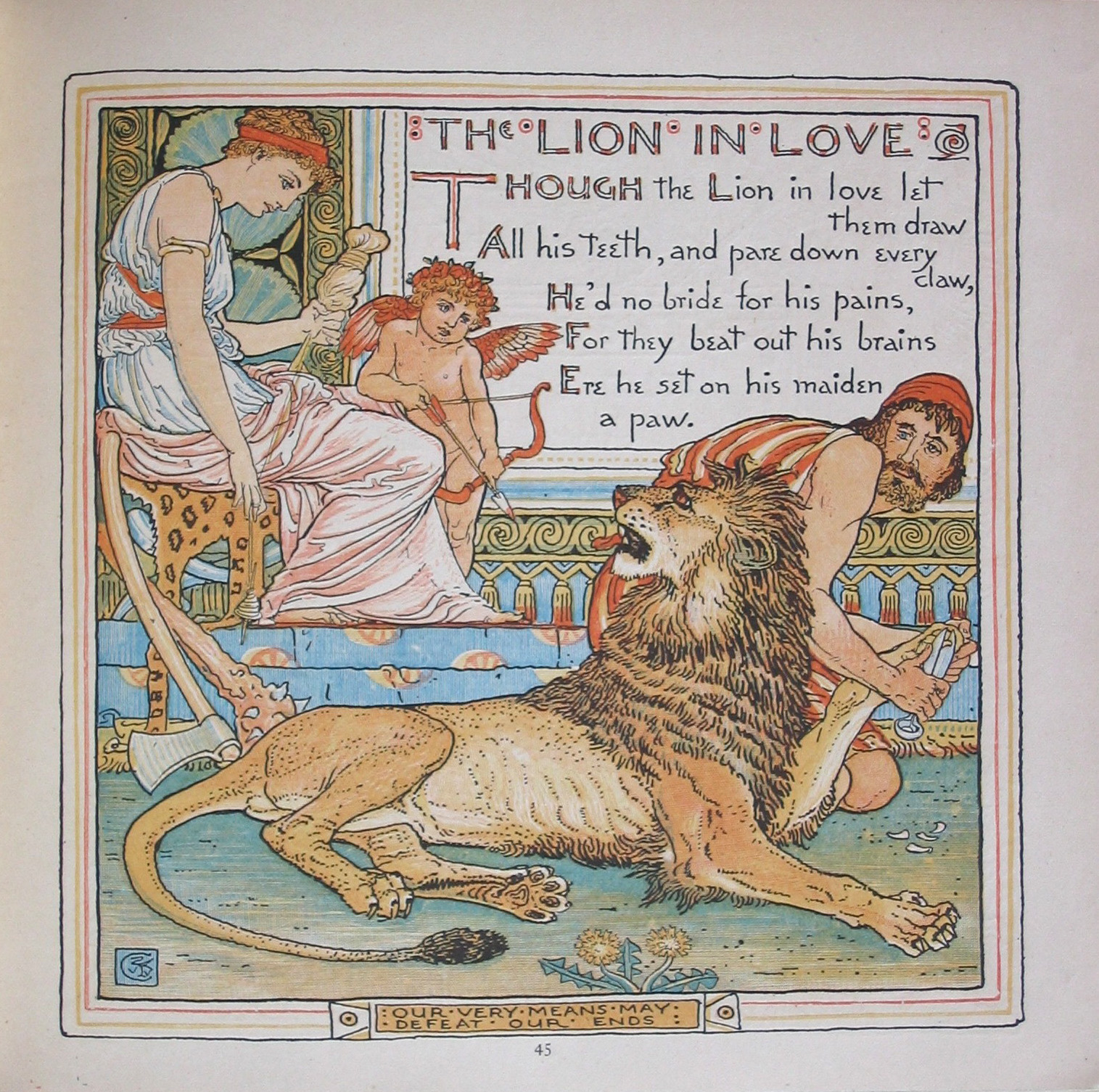
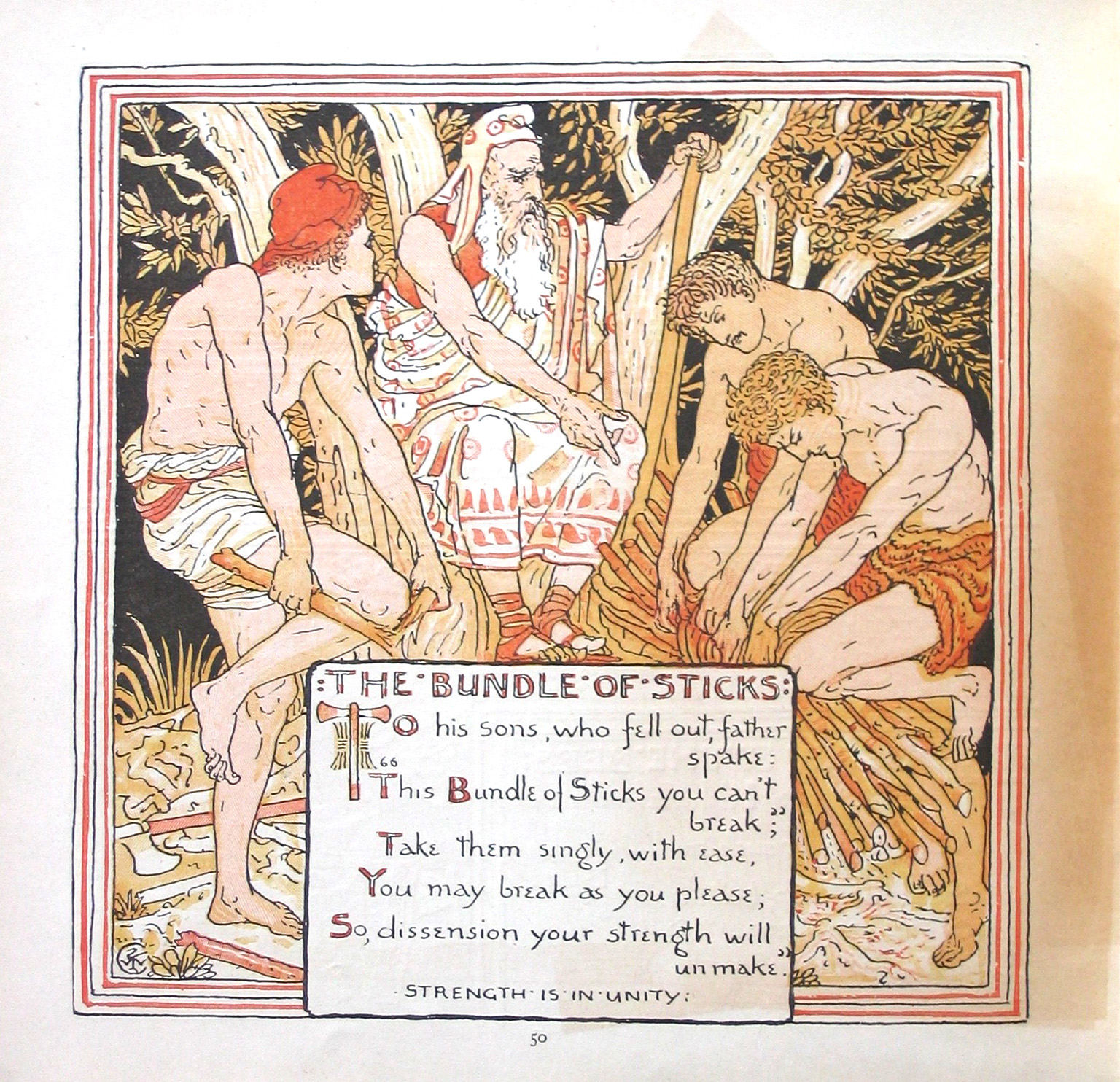
76) The babyâ??s own Aesop. Being the Fables condensed in Rhyme with portable morals pictorially pointed.
London 1887
An illustrated childrenâ??s book with a series of sixty-six limericks. The coloured drawings by Crane were reproduced by Edmund Evans as photo-etchings.
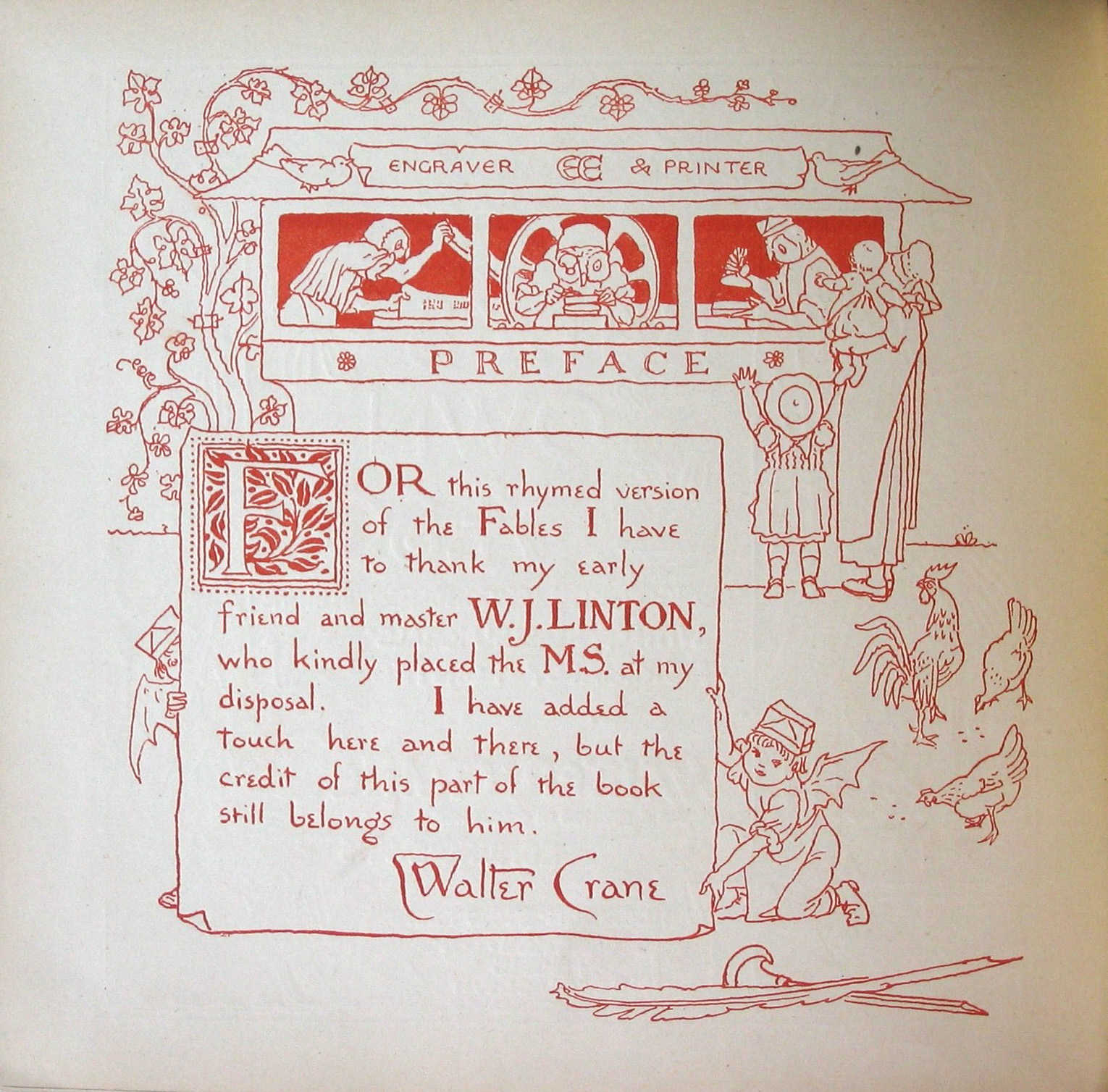
“In 1886 I added another little book to the Baby’s Opera series. (...) For the Text I was indebted to my old friend and master, W.J. Linton. He has treated the Fables in verse, compressing them into very succinct lines with still shorter morals, `for the use of railway travellers and others´ as he said” (W. Crane, An Artist’s Reminiscences). In fact, Crane could fall back on an Aesop edition, which Linton had published six years before in a limited edition of ten copies under the pseudonym P.J.: The Wisdom of Aesop condensed. Fables in familiar verse: with delightfully short morals: for the use and amuse of railroad-travellers and others.
Legend has it that Aesop, the author of a canon of subversive fables, was an enfranchised slave. Crane’s illustrations stress Linton’s republican interpretations of the fables through certain pictorial applications like the red bonnets of the protagonists.